History Of Aquaponics
History of Aquaponics
The idea of combining fish and veggie production into an integrated system is far from new. Ancient precedents for integrated aquaculture include the chinampas of Mexico and the integrated rice paddy systems across parts of Asia. But how did we get from these sorts of ancient land-based systems all the way to backyard aquaponics?
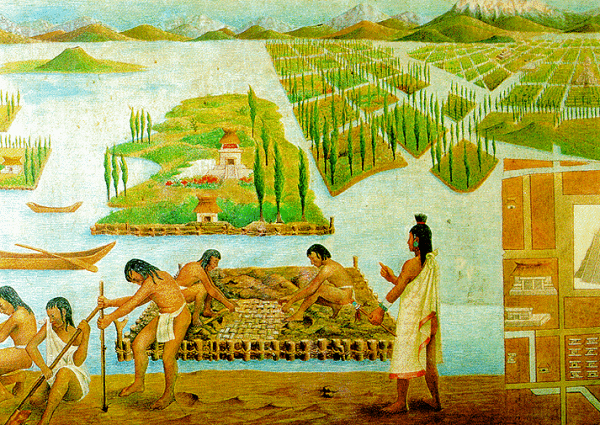
Aquaponics is a term that was coined in the 1970s, but the practice has ancient roots – although there is some debate on its first occurrence.The earliest example of one branch may be the lowland Maya, followed by the Aztecs, who raised plants on rafts on the surface of a lake in approximately 1,000 A.D.
The Aztecs cultivated a system of agricultural islands known as chinampas in a system considered by some to be the first form of aquaponics for agricultural use. Chinampas are networks of canals and stationary artificial islands in which they cultivated crops on the islands using nutrient-rich mud and water from the canals.In the early chinampa systems, plants were raised on stationary (and sometime movable) islands in lake shallows. Nutrient-rich waste materials dredged from the Chinampa canals and the surrounding cities was then used to manually irrigate the plants above.

Animal housing located over fish ponds to utilize manure as fish food
The earliest example of another branch can be found in South China, Thailand, and Indonesia, where the cultivation and farming rice in paddy fields in combination with fish are cited as examples of early aquaponics systems. These polycultural farming systems existed in many Far Eastern countries and raised fish such as the oriental loach, swamp eel, Common and crucian carp as well as pond snails in the paddies.The ancient Chinese employed a system of integrated aquaculture in which finfish, catfish, ducks and plants co-existed in a symbiotic relationship.The ducks were housed in cages over the finfish ponds, and the finfish processed the wastes from the ducks. In a lower pond, the catfish live on the wastes that have flowed from the finfish pond.At the bottom of the system, the water from the catfish ponds was used for irrigated rice and vegetable crops.