Aquaponics in India Handbook
Introduction and Understanding Aquaponics
BENEFITS AND WEAKNESSES OF AQUAPONIC FOOD PRODUCTION
Major benefits of aquaponic food production:
• Sustainable and intensive food production system.
• Two agricultural products (fish and vegetables) are produced from one nitrogen source (fish food).
• Extremely water efficient.
• Does not require soil.
• Does not use fertilizers or chemical pesticides.
• Higher yields and qualitative production.
• Organic like management and production.
• Higher level of biosecurity and lower risks from outer contaminants.
• Higher control on production leading to lower losses.
• Can be used on non arable land such as deserts, degraded soil or salty, sandy islands.
• Creates little waste.
• Daily tasks, harvesting and planting are labor saving and therefore can include all genders and ages.
• economical production of either family food production or cash crops in many locations.
• Construction materials and information base are widely available.
Major weaknesses of aquaponic food production:
• Expensive initial start up costs compared with soil vegetable production or hydroponics.
• nowledge of fish, bacteria and plant production is needed for each farmer to be successful.
• Fish and plant requirements do not always match perfectly.
• Not recommended in places where cultured fish and plants cannot meet their optimal
temperature ranges.
• reduced management choices compared with stand alone aquaculture or hydroponic
systems.
• Mistakes or accidents can cause catastrophic collapse of system.
• Daily management is mandatory.
• Energy demanding.
• Requires reliable access to electricity, fish seed and plant seeds.
• Alone, aquaponics will not provide a complete diet.

Key Points
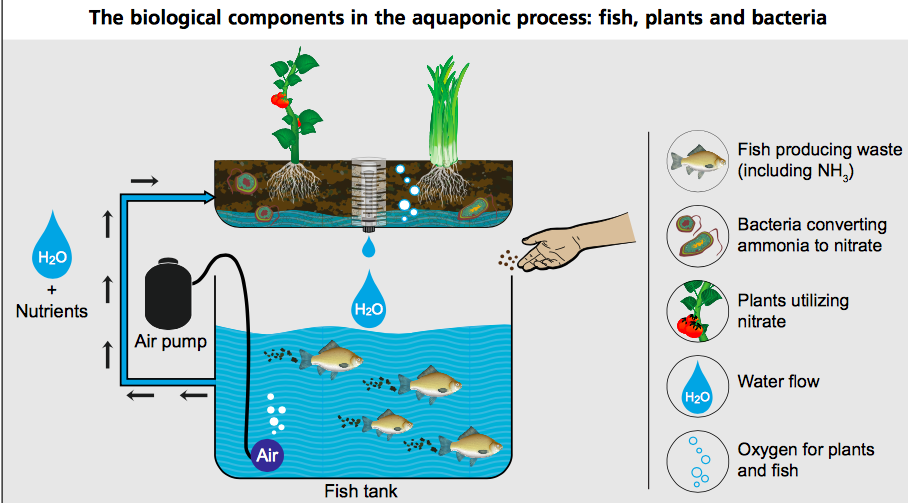
• Aquaponics is a production system that combines fish farming with soil less vegetable production in one recirculating system.
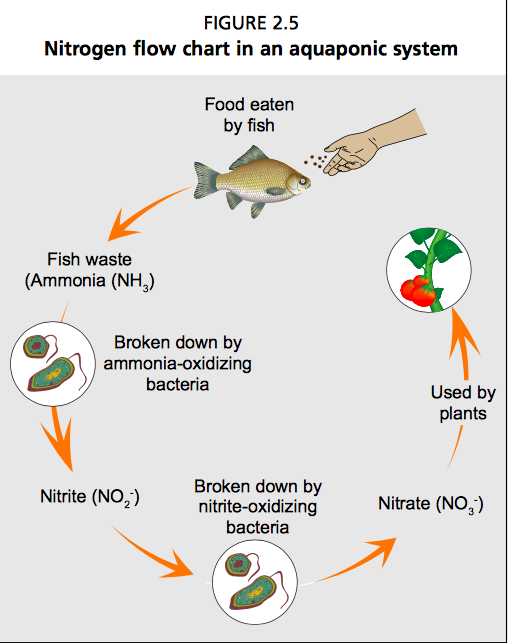
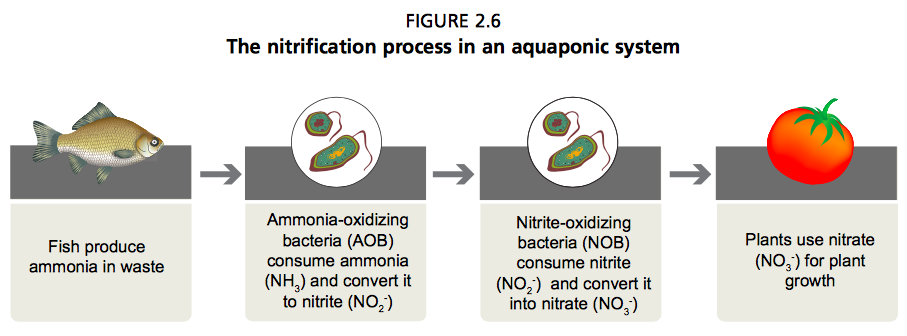
• Nitrifying bacteria convert fish waste (ammonia) into plant food (nitrate).
• The same nitrification process that happens in soil also happens in the aquaponics system.
• The most important part of aquaponics, the bacteria, is invisible to the naked eye.
• The key factors for maintaining healthy bacteria are water temperature, pH, dissolved oxygen and adequate surface area on which the bacteria can grow.
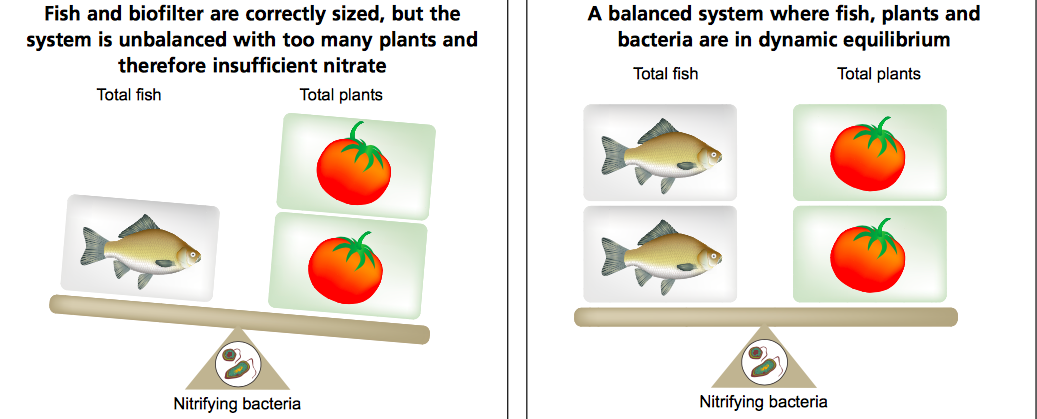
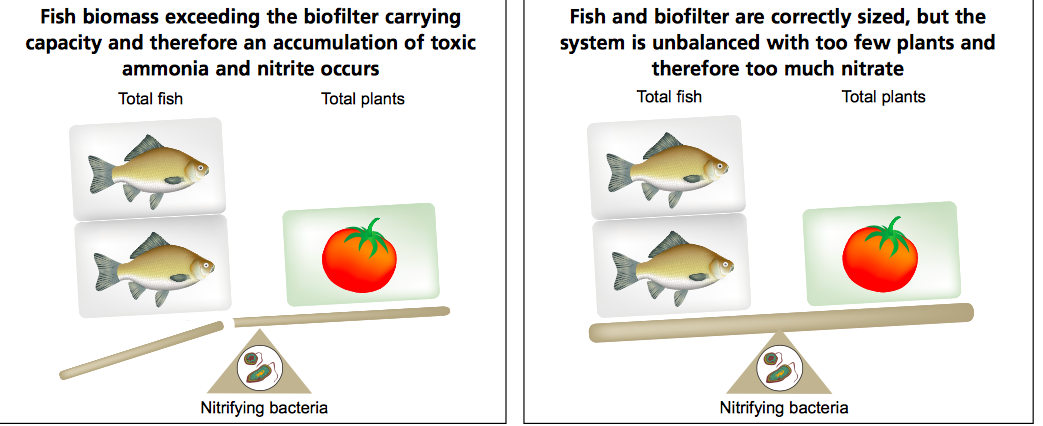
• Successful aquaponics systems are balanced. The feed rate ratio is the main guideline to balance the amount of fish feed to plant growing area, which is measured in grams of daily feed per square meter of plant growing space.
• The feed rate ratio for leafy vegetables is 40–50 g/m2/day; fruiting vegetables require 50–80 g/m2/day.
• Daily health monitoring of the fish and the plants will provide feedback on the balance of the system. Disease, nutritional deficiencies and death are symptoms of an unbalanced system.
• Water testing will provide information on the balance of the system. High ammonia or nitrite indicates insufficient bio filtration; low nitrate indicates too many plants or not enough fish; increasing nitrate is desirable and indicates adequate nutrients for the plants, though water needs to be exchanged when nitrate is greater than 150 mg/liter.
Water Quality in Aquaponics

THE FIVE MOST IMPORTANT WATER QUALITY PARAMETERS
1. Oxygen


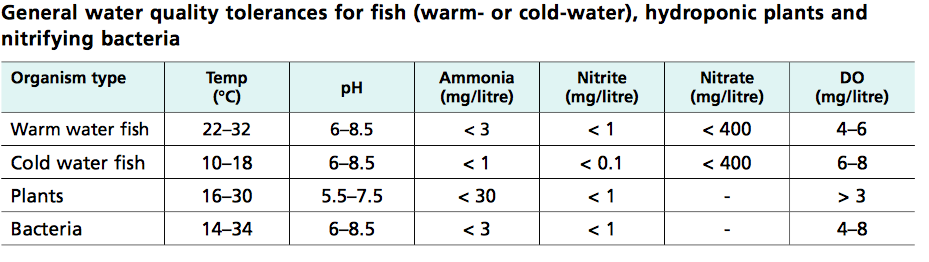
The optimum DO levels for each organism to thrive are 5–8 mg/litre
2. pH :-
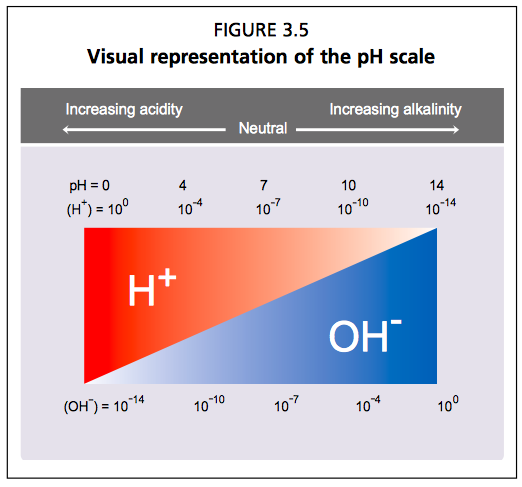
A general knowledge of pH is useful for managing aquaponic systems. The pH of a solution is a measure of how acidic or basic the solution is on a scale ranging from 1 to 14. A pH of 7 is neutral; anything below 7 is acidic, while anything above 7 is basic. The term pH is defined as the amount of hydrogen ions (H+) in a solution; the more hydrogen ions, the more acidic.
Two important aspects of the pH scale are :-
• The pH scale is negative a pH of 7 has fewer hydrogen ions than a pH of 6.
• The pH scale is logarithmic : a pH of 7 has 10 times fewer hydrogen ions than a pH of 6, 100 times fewer than a pH of 5, and 1 000 times fewer than a pH of 4.
(For example, if the pH of an aquaponic unit is recorded as 7, and later the value is recorded as 8, the water now has ten times fewer freely associated H+ ions because the scale is negative and logarithmic. It is important to be aware of the logarithmic nature of the pH scale because it is not necessarily intuitive. For the previous example, if a later reading showed the pH to be 9, the problem would be 100 times worse, and therefore hypercritical, instead of just being two times worse)
Importance of pH
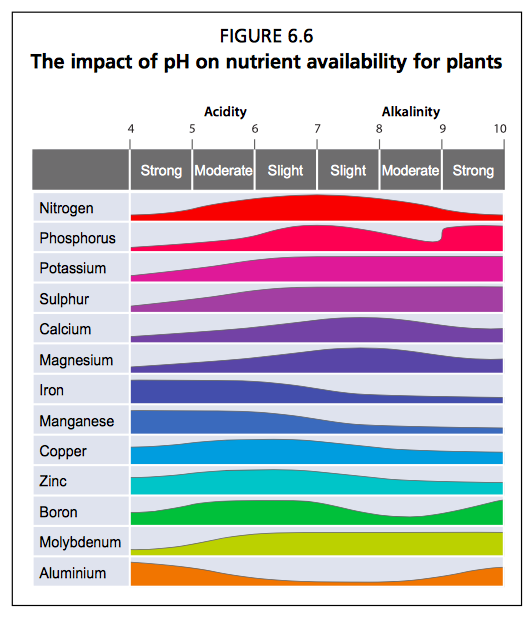
The pH of the water has a major impact on all aspects of aquaponics, especially the plants and bacteria. For plants, the pH controls the plants’ access to micro- and macronutrients. At a pH of 6.0–6.5, all of the nutrients are readily available, but outside of this range the nutrients become difficult for plants to access. In fact, a pH of 7.5 can lead to nutrient deficiencies of iron, phosphorus and manganese. This phenomenon is known as nutrient lock-out .
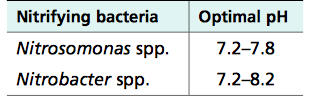
Nitrifying bacteria experience difficulty below a pH of 6, and the bacteria’s capacity to convert ammonia into nitrate reduces in acidic, low pH conditions. This can lead to reduced biofiltration, and as a result the bacteria decrease the conversion of ammonia to nitrate, and ammonia levels can begin to increase, leading to an unbalanced system stressful to the other organisms.
Fish have specific tolerance ranges for pH as well, but most fish used in aquaponics have a pH tolerance range of 6.0–8.5. However, the pH affects the toxicity of ammonia to fish, with higher pH leading to higher toxicity.
In conclusion, the ideal aquaponic water is slightly acidic, with an optimum pH range of 6–7. This range will keep the bacteria functioning at a high capacity, while allowing the plants full access to all the essential micro- and macronutrients. pH values between 5.5 and 7.5 require management attention and manipulation through slow and measured means. However, a pH lower than 5 or above 8 can quickly become a critical problem for the entire ecosystem and thus immediate attention is required.
There are many biological and chemical processes that take place in an aquaponics system that affect the pH of the water, some more significantly than others, including: the nitrification process; fish stocking density; and phytoplankton.
The nitrification process
The nitrification process of bacteria naturally lowers the pH of an aquaponic system. Weak concentrations of nitric acid are produced from the nitrification process as the bacteria liberate hydrogen ions during the conversion of ammonia to nitrate. Over time, the aquaponic system will gradually become more acidic primarily as a result of this bacterial activity.
Fish stocking density
The respiration, or breathing, of the fish releases carbon dioxide (CO2) into the water. This carbon dioxide lowers pH because carbon dioxide converts naturally into carbonic acid (H2CO3) upon contact with water. The higher the fish stocking density of the unit, the more carbon dioxide will be released, hence lowering the overall pH level. This effect is increased when the fish are more active, such as at warmer temperatures.
Phytoplankton
Respiration by fish lowers the pH by releasing carbon dioxide into the water; conversely, the photosynthesis of plankton, algae and aquatic plants remove carbon dioxide from the water and raises the pH. The effect of algae on pH follows a daily pattern, where the pH rises during the day as the aquatic plants photosynthesize and remove carbonic acid, and then falls overnight as the plants respire and release carbonic acid. Therefore, the pH is at a minimum at sunrise and a maximum at sunset.
3. Temperature
Water temperature affects all aspects of aquaponic systems. Overall, a general compromise range is 18–30 °C
4. Total nitrogen: ammonia, nitrite, nitrate
Nitrogen is the fourth crucial water quality parameter. It is required by all life, and part of all proteins. Nitrogen originally enters an aquaponic system from the fish feed, usually labelled as crude protein and measured as a percentage. Some of this protein is used by the fish for growth, and the remainder is released by the fish as waste. This waste is mostly in the form of ammonia (NH3) and is released through the gills and as urine. Solid waste is also released, some of which is converted into ammonia by microbial activity. This ammonia is then nitrified by bacteria, and converted into nitrite (NO2-) and nitrate (NO3-). Nitrogenous wastes are poisonous to fish at certain concentrations, although ammonia and nitrite are approximately 100 times more poisonous than nitrate. Although toxic to fish, nitrogen compounds are nutritious for plants, and indeed are the basic component of plant fertilizers. All three forms of nitrogen (NH3, NO2- and NO3-) can be used by plants, but nitrate is by far the most accessible. In a fully functioning aquaponic unit with adequate biofiltration, ammonia and nitrite levels should be close
to zero, or at most 0.25–1.0 mg/litre. The bacteria present in the biofilter should be converting almost all the ammonia and nitrite into nitrate before any accumulation can occur.
Impacts of high ammonia
Ammonia is toxic to fish. Tilapia and carp can show symptoms of ammonia poisoning at levels as low as 1.0 mg/litre. Prolonged exposure at or above this level will cause damage to the fishes’ central nervous system and gills, resulting in loss of equilibrium, impaired respiration and convulsions. The damage to the gills, often evidenced by red colouration and inflammation on the gills, will restrict the correct functioning of other physiological processes, leading to a suppressed immune system and eventual death. Other symptoms include red streaks on the body, lethargy and gasping at the surface for air. At higher levels of ammonia, effects are immediate and numerous deaths can occur rapidly. However, lower levels over a long period can still result in fish stress, increased incidence of disease and more fish loss.
As discussed above, ammonia toxicity is actually dependent on both pH and temperature, where higher pH and water temperature make ammonia more toxic. Chemically, ammonia can exist in two forms in water, ionized and unionized. Together, these two forms together are called total ammonia nitrogen (TAN), and water testing kits are unable to distinguish between the two. In acidic conditions, the ammonia binds with the excess hydrogen ions (low pH means a high concentration of H+) and becomes less toxic. This ionized form is called ammonium. However, in basic conditions (high pH, above 7), there are not enough hydrogen ions and the ammonia remains in its more toxic state, and even low levels of ammonia can be highly stressful for the fish. This problem is exacerbated in warm water conditions.
Activity of nitrifying bacteria declines dramatically at high levels of ammonia. Ammonia can be used as an antibacterial agent, and at levels higher than 4 mg/litre it will inhibit and drastically reduce the effectiveness of the nitrifying bacteria. This can result in an exponentially deteriorating situation when an undersized biofilter is overwhelmed by ammonia, the bacteria die and the ammonia increases even more.
Impacts of high nitrite
Nitrite is toxic to fish. Similar to ammonia, problems with fish health can arise with concentrations as low as 0.25 mg/litre. High levels of NO2- can immediately lead to rapid fish deaths. Again, even low levels over an extended period can result in increased fish stress, disease and death. Toxic levels of NO2- prevent the transport of oxygen within the bloodstream of fish, which causes the blood to turn a chocolate-brown colour and is sometimes known as “brown blood disease”. This effect can be seen in fish gills as well. Affected fish exhibit similar symptoms to ammonia poisoning, particularly where fish appear to be oxygen- deprived, seen gasping at the surface even in water with a high concentration of DO.
Impacts of high nitrate
Nitrate is a far less toxic than the other forms of nitrogen. It is the most accessible form of nitrogen for plants, and the production of nitrate is the goal of the biofilter. Fish can tolerate levels of up to 300 mg/litre, with some fish tolerating levels as high as 400 mg/litre. High levels (> 250 mg/litre) will have a negative impact on plants, leading to excessive vegetative growth and hazardous accumulation of nitrates in leaves, which is dangerous for human health. It is recommended to keep the nitrate levels at 5–150 mg/litre and to exchange water when levels become higher.
5. Water hardness
The final water quality parameter is water hardness. There are two major types of hardness: general hardness (GH), and carbonate hardness (KH). General hardness is a measure of positive ions in the water. Carbonate hardness, also known as alkalinity, is a measure of the buffering capacity of water. The first type of hardness does not have a major impact on the aquaponic process, but KH has a unique relationship with pH that deserves further explanation.
General hardness
General hardness is essentially the amount of calcium (Ca2+), magnesium (Mg2+) and, to a lesser extent, iron (Fe+) ions present in water. It is measured in parts per million (equivalent to milligrams per litre). High GH concentrations are found in water sources such as limestone-based aquifers and/or river beds, as limestone is essentially composed of calcium carbonate (CaCO3). Both Ca2+ and Mg2+ ions are essential plant nutrients, and they are taken up by plants as the water flows through the hydroponic components. Rainwater has low water hardness because these ions are not found in the atmosphere. Hard water can be a useful source of micronutrients for aquaponics, and has no health effects on the organisms. In fact, the presence of calcium in the water can prevent fish from losing other salts and lead to a healthier stock.
Carbonate hardness or alkalinity
Carbonate hardness is the total amount of carbonates (CO32-) and bicarbonates (HCO3-) dissolved in water. It is also measured in milligrams of CaCO3 per litre. In general, water is considered to have high KH at levels of 121–180 mg/litre. Water sourced from limestone bedrock wells/aquifers will normally have a high carbonate hardness of about 150–180 mg/litre.
Carbonate hardness in water has an impact on the pH level. Simply put, KH acts as a buffer (or a resistance) to the lowering of pH. Carbonate and bicarbonate present in the water will bind to the H+ ions released by any acid, thus removing these free H+ ions from the water. Therefore, the pH will stay constant even as new H+ ions from the acid are added to the water. This KH buffering is important, because rapid changes in pH are stressful to the entire aquaponic ecosystem. The nitrification process generates nitric acid (HNO3), as discussed which is dissociated in water in its two components, hydrogen ions (H+) and nitrate (NO3-), with the latter used as source of nutrients for plants. However, with adequate KH the water does not actually become more acidic. If no carbonates and bicarbonates were present in the water, the pH would quickly drop in the aquaponic unit. The higher the concentration of KH in the water, the longer it will act as a buffer for pH to keep the system stable against the acidification caused by the nitrification process.
It is a rather complicated process but it is important to understand for aquaponics (or other soil-less culture) practitioners where the available water is naturally very hard (which is normally the case in regions with limestone or chalk bedrock), as pH manipulation will become a vital part of unit management.
As mentioned above, the constant nitrification in an aquaponic unit produces nitric acid and increases the number of H+ ions, which would lower the pH in the water. If no carbonates or bicarbonates are present to buffer the H+ ions in the water, the pH will quickly drop as more H+ ions are added into the water. Carbonates and bicarbonates, as shown in Figure 3.6, bind the hydrogen ions (H+) released from the nitric acid and maintain a constant pH by balancing the surplus of H+ with the production of carbonic acid, which is a very weak acid. The H+ ions remain bound to the compound and are
It is essential for aquaponics that a certain concentration of KH is present at all times in the water, as it can neutralize the acids created naturally and keep the pH constant. Without adequate KH, the unit could be subjected to rapid pH changes that would have negative impacts on the whole system, especially the fish. However, KH is present in many water sources. Replenishing the unit with water from these sources will also replenish the levels of KH. However, rainwater is low in KH, and in rainfed systems it is helpful to add external sources of carbonate, as explained below.
Summary of essential points on hardness
General Hardness (GH) is the measurement of positive ions, especially calcium and magnesium.
Carbonate Hardness (KH) measures the concentration of carbonates and bicarbonates that buffer the pH (create resistance to pH change). Hardness can be classified along the water hardness scale as shown below:
The optimum level of both hardness types for aquaponics is about 60–140 mg/litre. It is not vital to check the levels in the unit, but it is important that the water being used to replenish the unit has adequate concentrations of KH to continue neutralizing the nitric acid produced during the nitrification process and to buffer the pH at its optimum level
MANIPULATING pH
There are simple methods to manipulate the pH in aquaponic units. In regions with limestone or chalk bedrock, the natural water is often hard with high pH. Therefore, periodic acid additions may be necessary to lower the pH. In regions with volcanic bedrock, the natural water will often be soft, with very low alkalinity, indicating a need to periodically add a base or a carbonate buffer to the water to counteract the natural acidification of the aquaponic unit. Base and buffer additions are also required for rainfed systems.
Lowering pH with acid
Aquaponic water naturally acidifies because of nitrification and respiration. With patience, the pH levels often decrease to the target range.
However, adding acid may be necessary if the source water has a high KH and high pH, and there is a high evaporation rate. In these uncommon and exceptional cases, the volume of water to resupply the system is such that it significantly raises the pH above the optimal ranges and overpowers the natural acidification. Adding acid is also necessary if the amount of fish stocked is not sufficient to produce enough dissolved wastes to drive nitrification and the resulting acidification. In these cases, the resupply of water will result in a resupply of the buffering agents, carbonates. The natural acid production will not be sufficient to react with the buffering agents and subsequently lower pH. Only add acid if the source water is very hard and basic and if there is not rainwater that can supply the system with KH-free water to help nitrifying bacteria to naturally lower the pH.
Adding acid to an aquaponics system is dangerous. The danger is that at first the acid reacts with buffers and no pH change is noticed. More and more acid is added with no pH change, until finally all of the buffers have reacted and the pH drops drastically, often resulting in a terrible and stressful shock to the system. It is better practice, if necessary to add acid, to treat a reservoir of this resupply water with acid, and then add the treated water to the system (Figure 3.10). This removes the risk to the system if too much acid is used. The acid should always be added to a volume of resupply water, and extreme care should be used not to add too much acid to the system. If the system is designed with an automatic water supply line it may be necessary to add acid directly to the system, but the danger is increased.
Phosphoric Acid can be used to lower the Ph. It is a relatively mild acid and can can be found in food-grade quality from hydroponic or agricultural supply stores under various trade names. Phosphorus is an important macronutrient for plants, but overuse of phosphoric acid can lead to toxic concentration of phosphorous in the system. In situations with extremely hard and basic source water a relatively neutral acid. Citric acid, while tempting to use, is antimicrobial and can kill the bacteria in the biofilter; citric acid should not be used.
Concentrated acids are dangerous, both to the system and to the operator. Proper safety precautions should be used, including safety goggles and gloves. Never add water to acid, always add acid to water.
Increasing pH with buffers or bases
If the pH level drops below 6.0, it is necessary to add a base and/or increase carbonate hardness. Commonly used are potassium hydroxide and calcium hydroxide .
Calcium carbonate or potassium carbonate can be addead and will increase both KH and Ph .Some inexpensive sources include crushed eggshells, finely crushed seashells, coarse limestone grit and crushed chalk. The recommended method is to put the material in a porous bag suspended in the sump tank.
Continue testing pH over the next few weeks to monitor the increase in pH. Remove the bag if the pH increases above 7.
Alternatively, add 2–3 handfuls of these materials per 1 000 litres either straight into the media beds or biofilter component. If using seashells, be sure to rinse away residual salt before adding to the system. The choice of the bases and buffers can also be driven by the type of plants growing in the system, as each of these compounds adds an important macronutrient. Leafy vegetables can be favoured by calcium bases to avoid tip burns on leaves; while potassium is optimal in fruit plants to favour flowering, fruit settings and optimal ripening.
Sodium bicarbonate (baking soda) is often used to increase carbonate hardness in RASs, but should never be used in aquaponics because of the resulting increase in sodium, which is detrimental to the plants.
Key points
- Water is the life blood of an aquaponic system. It is the medium through which plants receive their nutrients and the fish receive their oxygen. It is very important to understand water quality and basic water chemistry in order to properly manage aquaponics.
- There are five key water quality parameters for aquaponics: dissolved oxygen (DO), pH, water temperature, total nitrogen concentrations and hardness (KH). Knowing the effects of each parameter on fish, plants and bacteria is crucial.
- Compromises are made for some water quality parameters to meet the needs of each organism in aquaponics.
The target ranges for each parameter are as follows:

- There are simple ways to adjust pH, bases, and less often acids, can be added in small amounts to the water in order to increase or lower the pH, respectively. Acids and bases should always be added slowly, deliberately and carefully. Rainwater can be alternatively used to let the system naturally lower the pH through nitrifying bacteria consuming the system’s alkalinity. Calcium carbonate from limestone, seashells or egg shells increases KH and buffers pH against the natural acidification.
- Some aspects of the water quality and water chemistry knowledge needed for aquaponics can be complicated, in particular the relationship between pH and hardness, but basic water tests are used to simplify water quality management.
- Water testing is essential to maintaining good water quality in the system. Test and record the following water quality parameters each week: pH, water temperature, nitrate and carbonate hardness. Ammonia and nitrite tests should be used especially at system start-up and if abnormal fish mortality raises toxicity concerns.
Design – Commercial Raft Based Aquaponics
Key Points
- The main factors when deciding where to place a unit are: stability of ground access to sunlight and shading; exposure to wind and rain; availability of utilities; and availability of a greenhouse or shading structure.
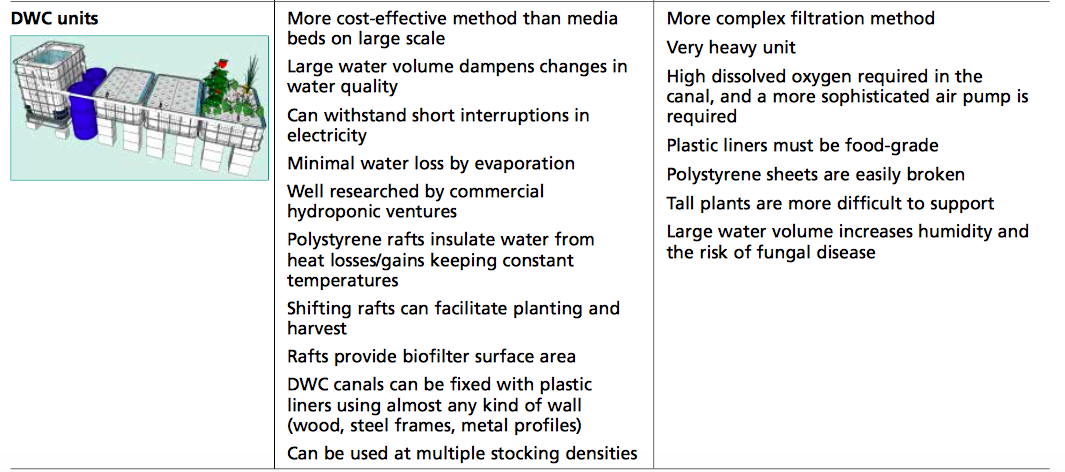
- There are three main types of aquaponics: the media bed method, also known as particulate bed; the nutrient film technique (NFT) method; and the deep water culture (DWC) method, also known as the raft method or floating system.
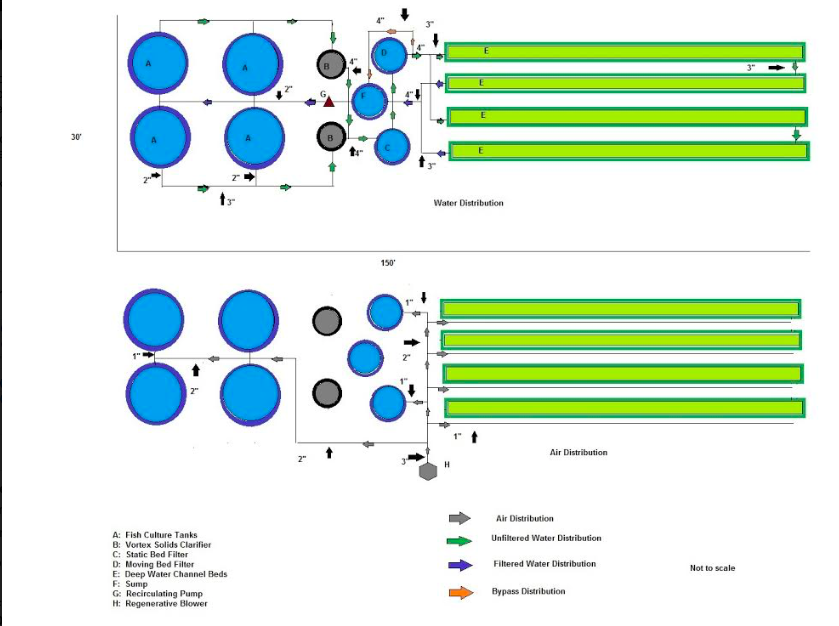
- The essential components for all aquaponic units are: the fish tank, the mechanical and biological filtration, the plant growing units ( DWC canals), and the water/air pumps.
- For DWC units, mechanical and biofiltration components are necessary in order to respectively remove the suspended solids and oxidize the dissolved wastes (ammonia to nitrate).
- For DWC units each canal should have a retention time of 2–4 hours.
High DO concentration is essential to secure good fish, plant and bacteria growth. In the fish tank DO is supplied by means of air stonesand they are positioned in both biofilter and plant canals.
Bacteria in Aquaponics and System Cycling
System Cycling
System cycling is a term that describes the initial process of building a bacterial colony when first starting any RAS, including an aquaponic unit. Under normal circumstances, this takes 3–5 weeks; cycling is a slow process that requires patience. Overall, the process involves constantly introducing an ammonia source into the aquaponic unit, feeding the new bacterial colony, and creating a biofilter. The progress is measured by monitoring the nitrogen levels. Generally, cycling takes place once an aquaponic system is built, but it is possible to give the biofilter a head start when creating a new aquaponic system. It is important to understand that during the cycling process there will be high levels of ammonia and nitrite, which could be harmful to fish. Also, make sure all aquaponic components, in particular the biofilter and fish tank, are protected from direct sunlight before starting the process.
Once introduced into the unit, the ammonia becomes an initial food source for the AOB, a few of which are naturally occurring and recruit to the system on their own. They can be found on land, in water and in the air. Within 5–7 days after the first addition of ammonia, the AOB start forming a colony and begin to oxidize the ammonia into nitrite. Ammonia should be continuously, but cautiously, added to ensure adequate food for the developing colony without becoming toxic. After another 5–7 days the nitrite levels in the water will have started to rise, which in turn attracts the NOB. As the NOB populations increase, the nitrite levels in the water will start to decline as nitrite is oxidized into nitrate. The full process is illustrated in Figure 5.3, which shows the trends of ammonia, nitrite and nitrate in the water over the first 20–25 days of cycling.
The end of the cycling process is defined as when the nitrate level is steadily increasing, the nitrite level is 0 mg/litre and the ammonia level is less than 1 mg/litre. In good conditions, this takes about 25–40 days, but if the water temperature is cool, complete cycling may take up to two months to finish. At this point, a sufficient bacterial colony has formed and is actively converting the ammonia to nitrate.
The reason this process is long is because nitrifying bacteria grow relatively slowly, requiring 10–15 hours to double in population. However, some heterotrophic bacteria can double in as little as 20 minutes.
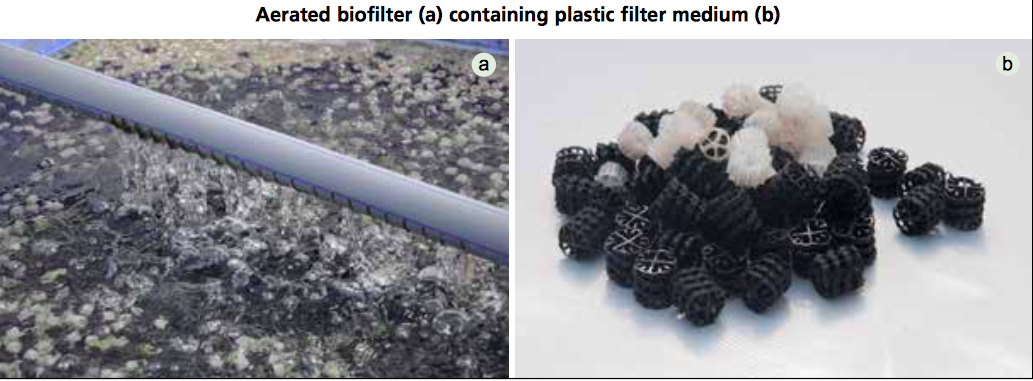
Aquarium or aquaculture retailers sell various products containing living nitrifying bacteria (in a bottle). Once added to the unit, they immediately colonize a system thus avoiding the cycling process explained above. However, these products may be expensive or unavailable and ultimately unnecessary, as the cycling process can be achieved using organic means. Alternatively, if another aquaponic system is available, it is extremely helpful to share part of the biofilter as a seed of bacteria for the new system. This greatly decreases the time necessary for cycling the system. It can also be useful to separately start a biofilter medium by continuously trickling a solution containing 2–3 mg/litre of ammonia for a few weeks in advance. The media would then function as a primer by simply incorporating it into the new aquaponic biofilter. A simple trickling system can be built by suspending a wide plastic crate of medium above a small tank containing the ammonia solution that is being circulated by a small aquarium pump.
Many people use fish as the original source of ammonia in a new tank. However, these fish suffer the effects of high ammonia and high nitrite throughout the cycling process. Many new aquarists do not have the patience to allow a tank to fully cycle and the result is that the new fish die, commonly referred to as “new tank syndrome”. If using fish, it is recommended to use a very low stocking density (≤ 1 kg/m3). Instead of using fish, there are other sources of this initial ammonia to start feeding the biofilter colony. Some possible sources include fish feed, sterilized animal waste, ammonium nitrate fertilizer and pure ammonia. Each of these sources has positives and negatives, and some sources are far better and safer to use than others.
The best ammonia source is finely ground fish food because it is a biologically safe product, and it is relatively easy to control the amount of ammonia being added . Be sure to use fresh, unspoiled and disease-free fish feed only. Chicken waste, despite being an excellent ammonia source, can be very risky and can introduce dangerous bacteria into the aquaponic system. Escherichia coli and Salmonella spp. are commonly found in chicken and other animal manure and, therefore, any manure must be sterilized before use. Household ammonia products can be used, but be sure that the product is 100 percent ammonia and does not include other ingredients such as detergents, colourants or heavy metals that could ruin the entire system. Once the ammonia source has been selected, it is important to add the ammonia slowly and consistently, and to monitor the nitrogen levels every 2–3 days. It is useful to record levels on a graph to track the process of the cycling. It is important not to add too much ammonia, and it is better to have a little bit too little than too much. The target level is 1–2 mg/litre. If ammonia levels ever exceed 3 mg/litre, it is necessary to do a water exchange to dilute the ammonia in order to prevent it from inhibiting the bacteria.
Adding fish and plants during the cycling process
Plants and fish should be added only after the cycle is complete. Plants can be added a little bit earlier, but expect nutrient deficiencies in these early plants during this period because other nutrients take time to reach optimal concentrations.
Only once the ammonia and nitrite levels are below 1 mg/litre it is safe to start stocking the fish. Always start stocking the fish slowly. Once fish have been stocked, it is not uncommon to see a secondary and smaller ammonia and nitrite spike. This happens if the ammonia created from the newly stocked fish is much greater than the daily ammonia amounts added during the cycling process. Continue to monitor the levels of all three types of nitrogen, and be prepared to do water exchanges if ammonia or nitrite levels rise above 1 mg/litre while the system continues to cycle.
KeyPoints
- In aquaponics, ammonia must be oxidized into nitrate to prevent toxicity to fish.
- The nitrification process is a two step
- bacterial process where ammonia-oxidizing bacteria convert ammonia (NH3) into nitrite (NO2-), and then nitrite-oxidizing bacteria convert nitrite into nitrate (NO3-).
- The five most important factors for good nitrification are: high surface area media for bacteria to grow and colonize; pH (6–7); water temperature (17–34 °C); DO (4–8 mg/litre); cover from direct exposure to sunlight
- System cycling is the initial process of building a nitrifying bacteria colony in a new aquaponic unit. This 3–5 week process involves adding an ammonia source into the system (fish feed, ammonia-based fertilizer, up to a concentration in water of 1-2 mg/litre) in order to stimulate nitrifying bacteria growth. This should be done slowly and consistently. Ammonia, nitrite and nitrate are monitored to determine the status of the biofilter: the peak and subsequent drop of ammonia is followed by a similar pattern of nitrite before nitrate starts to accumulate. Fish and plants are only added when ammonia and nitrite levels are low and the nitrate level begins to rise.
- Ammonia and nitrite tests are used to monitor the function of the nitrifying bacteria and the performance of the biofilter. In a functioning system, ammonia and nitrite should be close to 0 mg/litre. High levels of either ammonia or nitrite require a water change and management action. Usually, poor nitrification is due to a change in water temperature, DO or pH levels.
- Another class of micro organisms naturally occurring in aquaponics is that of heterotrophic bacteria. They decompose the solid fish waste, releasing some of the nutrients into the water in a process called mineralization.
Plants In Aquaponics
Nutrient Requirements for Plants
Macronutrients
There are six nutrients that plants need in relatively large amounts. These nutrients are nitrogen, phosphorous, potassium, calcium, magnesium and sulphur. The following discussion outlines the function of these macronutrients within the plant. Symptoms of deficiencies are also listed in order to help identify problems.
Nitrogen (N) is the basis of all proteins. It is essential for building structures, photosynthesis, cell growth, metabolic processes and the production of chlorophyll. As such, nitrogen is the most common element in a plant after carbon and oxygen, both of which are obtained from the air. Nitrogen is therefore the key element in the aquaponic nutrient solution and serves as an easy-to-measure proxy indicator for other nutrients. Usually, dissolved nitrogen is in the form of nitrate, but plants can utilize moderate quantities of ammonia and even free amino acids to enable their growth. Nitrogen deficiencies are obvious, and include yellowing of older leaves, thin stems, and poor vigour . Nitrogen can be reallocated within plant tissues and therefore is mobilized from older leaves and delivered to new growth, which is why deficiencies are seen in older growth. An overabundance of nitrogen can cause excess vegetative growth, resulting in lush, soft plants susceptible to disease and insect damage, as well as causing difficulties in flower and fruit set.
Phosphorus (P) is used by plants as the backbone of DNA (deoxyribonucleic acid), as a structural component of phospholipid membranes, and as adenosine triphosphate (the component to store energy in the cells). It is essential for photosynthesis, as well as the formation of oils and sugars. It encourages germination and root development in seedlings. Phosphorous deficiencies commonly cause poor root development because energy cannot be properly transported through the plant; older leaves appear dull green or even purplish brown, and leaf tips appear burnt.
Potassium (K) is used for cell signalling via controlled ion flow through membranes. Potassium also controls stomatic opening, and is involved in flower and fruit set. It is involved in the production and transportation of sugars, water uptake, disease resistance and the ripening of fruits. Potassium deficiency manifests as burned spots on older leaves and poor plant vigour and turgor . Without potassium, flowers and fruits will not develop correctly. Interveinal chlorosis, or yellowing between the veins of the leaves, may be seen on the margins.
Calcium (Ca) is used as a structural component of both cell walls and cell membranes. It is involved in strengthening stems, and contributes to root development. Deficiencies are common in hydroponics and are always apparent in the newest growth because calcium is immobile within the plant. Tip burn of lettuces and blossom-end rot of tomatoes and zucchinis are examples of deficiency. Often, new leaves are distorted with hooked tips and irregular shapes. Calcium can only be transported through active xylem transpiration, so when conditions are too humid, calcium can be available but locked-out because the plants are not transpiring. Increasing air flow with vents or fans can prevent this problem. The addition of coral sand or calcium carbonate can be used to supplement calcium in aquaponics with the added benefit of buffering pH.
Magnesium (Mg) is the centre electron acceptor in chlorophyll molecules and is a key element in photosynthesis. Deficiencies can be seen as yellowing of leaves between the veins especially in older parts of the plant. Although the concentration of magnesium is sometimes low in aquaponics, it does not appear to be a limiting nutrient, and addition of magnesium to the system is generally unnecessary.
Sulphur (S) is essential to the production of some proteins, including chlorophyll and other photosynthetic enzymes. The amino acids methionine and cysteine both contain sulphur, which contributes to some proteins’ tertiary structure. Deficiencies are rare, but include general yellowing of the entire foliage in new growth. Leaves may become yellow, stiff and brittle, and fall off.
Micronutrients
Below is a list of nutrients that are only needed in trace amounts. Most micronutrient deficiencies involve yellowing of the leaves (such as iron, manganese, molybdenum and zinc). However, copper deficiencies cause leaves to darken their green colour.
Iron (Fe) is used in chloroplasts and the electron transport chain, and is critical for proper photosynthesis. Deficiencies are seen as intervenous yellowing, followed by the entire foliage turning pale yellow (chlorotic) and eventually white with necrotic patches and distorted leaf margins. As iron is a non-movable element, iron deficiencies are easily identified if new leaves appear chlorotic. Iron has to be added as chelated iron, otherwise known as sequestered iron or bed whenever deficiencies are suspected; a larger quantity does not harm the system, but can cause discolouration of tanks and pipes. It has been suggested that submerged magnetic-drive pumps can sequester iron and is the subject of current research.
Manganese (Mg) is used to catalyse the splitting of water during photosynthesis, and as such, manganese is important to the entire photosynthesis system. Deficiencies manifest as reduced growth rates, a dull grey appearance and intervenous yellowing between veins that remain green, followed by necrosis. Symptoms are similar to iron deficiencies and include chlorosis. Manganese uptake is very poor at pH greater than 8.
Boron (B) is used as a sort of molecular catalyst, especially involved in structural polysaccharides and glycoproteins, carbohydrate transport, and regulation of some metabolic pathways in plants. It is also involved in reproduction and water uptake by cells. Deficiencies may be seen as incomplete bud development and flower set, growth interruption and tip necrosis, and stem and root necrosis.
Zinc (Zn) is used by enzymes and also in chlorophyll, affecting overall plant size, growth and maturation. Deficiencies may be noticed as poor vigour, stunted growth with reduced inter-nodal length and leaf size, and intravenous chlorosis that may be confused with other deficiencies.
Copper (Cu) is used by some enzymes, especially in reproduction. It also helps strengthen stems. Deficiencies may include chlorosis and brown or orange leaf tips, reduced growth of fruits, and necrosis. Sometimes, copper deficiency shows as abnormally dark green growth.
Molybdenum (Mo) is used by plants to catalyse redox reactions with different forms of nitrogen. Without sufficient molybdenum, plants can show symptoms of nitrogen deficiency although nitrogen is present. Molybdenum is biologically unavailable at pH less than 5.
Common Vegetable Growing Guidelines
BASIL
pH: 5.5–6.5
Plant spacing: 15–25 cm (8–40 plants/m2)
Germination time and temperature: 6–7 days with temperatures at 20–25 °C Growth time: 5–6 weeks (start harvesting when plant is 15 cm)
Temperature: 18–30 °C, optimal 20–25 °C
Light exposure: Sunny or slightly sheltered
Plant height and width: 30–70 cm; 30 cm
Recommended aquaponic method: media beds, NFT and DWC
LETTUCE (MIXED SALAD LEAVES):
pH: 6.0–7.0
Plant spacing: 18–30 cm (20–25 heads/m2)
Germination time and temperature: 3–7 days; 13–21 °C Growth time: 24–32 days (longer for some varieties) Temperature: 15–22 °C (flowering over 24 °C)
Light exposure: full sun (light shading in warm temperatures) Plant height and width: 20–30 cm; 25–35 cm
Recommended aquaponic method: media bed, NFT and DWC
CUCUMBERS
pH: 5.5–6.5
Plant spacing: 30–60 cm (depending on variety; 2–5 plants/m2) Germination time and temperature: 3–7 days; 20–30 °C
Growth time: 55–65 days
Temperature: 22–28 °C day, 18–20 °C night; highly susceptible to frost. Light exposure: full sun
Plant height and width: 20–200 cm; 20–80 cm
Recommended aquaponic method: media beds; DWC
TOMATO
pH: 5.5–6.5
Plant spacing: 40–60 cm (3–5 plants/m2)
Germination time and temperature: 4–6 days; 20–30 °C
Growth time: 50–70 days till first harvest; fruiting 90–120 days up to 8–10 months (indeterminate varieties)
Optimal temperatures: 13–16 °C night, 22–26 °C day
Light exposure: full sun
Plant height and width: 60–180 cm; 60–80 cm
Recommended aquaponic method: media beds and DWC
SWISS CHARD / MANGOLD
pH: 6–7.5
Plant spacing: 30–30 cm (15–20 plants/m2)
Germination time and temperature: 4–5 days; 25–30 °C optimal Growth time: 25–35 days
Temperature: 16–24 °C
Light exposure: full sun (partial shade for temperatures > 26 °C) Plant height and width: 30–60 cm; 30–40 cm
Recommended aquaponic method: media beds, NFT pipes and DWC
PARSLEY
pH: 6–7
Plant spacing: 15–30 cm (10–15 plants/m2)
Germination time and temperature: 8–10 days; 20–25 °C Growth time: 20–30 days after transplant
Temperature: 15–25 °C
Light exposure: full sun; partial shade at > 25 °C
Plant height and width: 30–60 cm; 30–40 cm
Recommended aquaponic method: media beds, NFT and DWC
Key Points
- The major advantages of aquaponics over soil agriculture are: (i) no wasted fertilizer; (ii) lower water use; (iii) higher productivity/quality; (iv) ability to utilize non-arable land; and (v) offset of tillage, weeding and other traditional agricultural tasks.
- Plants require sunlight, air, water and nutrients to grow. ssential macronutrients include: nitrogen, phosphorus, potassium, calcium, magnesium and sulphur; Micronutrients include iron, zinc, boron, copper, manganese and molybdenum. Deficiencies need to be addressed by supplying the limiting nutrients with supplemental fertilizer or increasing mineralization.
- The most important water quality parameter for plants is pH because it affects the availability of essential nutrients.
- The suitable temperature range for most vegetables is 18–2 °C, although many vegetables are seasonal. Winter vegetables require temperatures of 8–20 °C, and summer vegetables require temperatures of 17–30 °C.
- Leafy green herbs and vegetables do extremely well in aquaponics. arge fruiting vegetables are also applicable, including tomatoes, peppers, eggplant, and cucumbers, peas and beans. Root crops and tubers are less commonly grown and require special attention.
- Integrated production and pest/disease management uses physical, mechanical and cultural practices to minimize pests/pathogens, and then uses fish-safe chemical and biological treatment in targeted applications, when necessary.
- Intelligent planting design can maximize space, encourage beneficial insects and improve production.
- Staggered planting provides continual harvest as well as a constant nutrient uptake and more consistent water quality.
Fish in Aquaponics
KEY POINTS
- Standard manufactured fish feed pellets are recommended for use in aquaponics because they are a whole feed containing the correct balance of proteins, carbohydrates, fats, vitamins and minerals needed for fish.
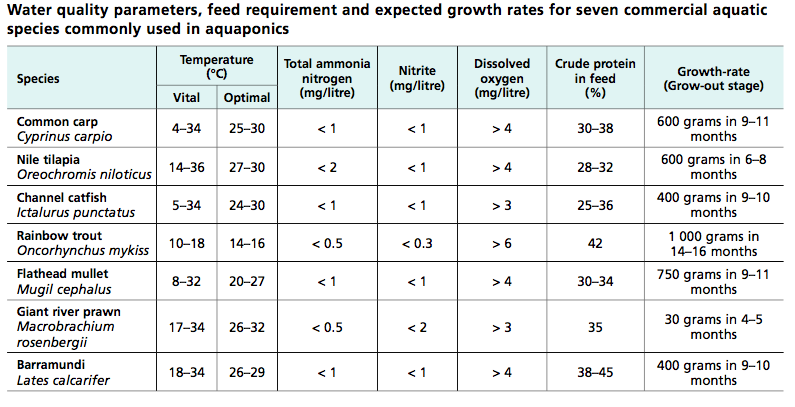
- Protein is the most important component for building fish body mass. Omnivorous fish such as tilapia and common carp need about 32 percent protein in their diet, carnivorous fish need more.
- Never overfeed the fish, and remove uneaten food after 30 minutes to reduce risks of ammonia or hydrogen sulphide toxicity.
- Water quality needs to be maintained for fish. Ammonia and nitrite must be close to 0 mg/litre as they are toxic at any detectable levels. Nitrate should be less than 400 mg/litre. DO should be 4–8 mg/litre.
- Tilapia, carp, and catfish are highly suitable for aquaponics in tropical or arid conditions as they grow quickly and can survive in poor quality water and at lower DO levels. Trout grow well in cold water, but require better water quality.
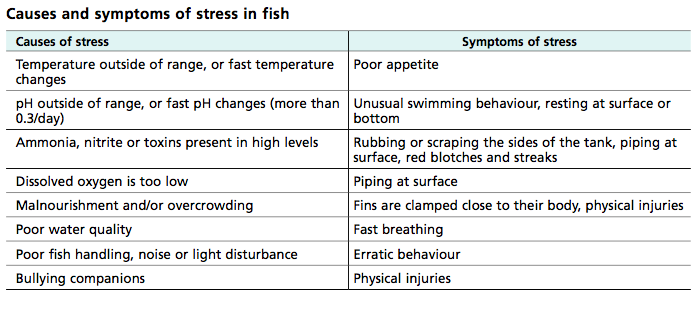
- Fish health should be monitored daily, and stress should be minimized. Poor and/or changing water quality, overcrowding, and physical disturbance can cause stress, which may lead to disease outbreaks.
- Abnormalities or changes in physical behaviour can indicate stress, bad water quality, parasites or disease. Take the time to observe and monitor the fish in order to recognize symptoms early and provide treatment.